


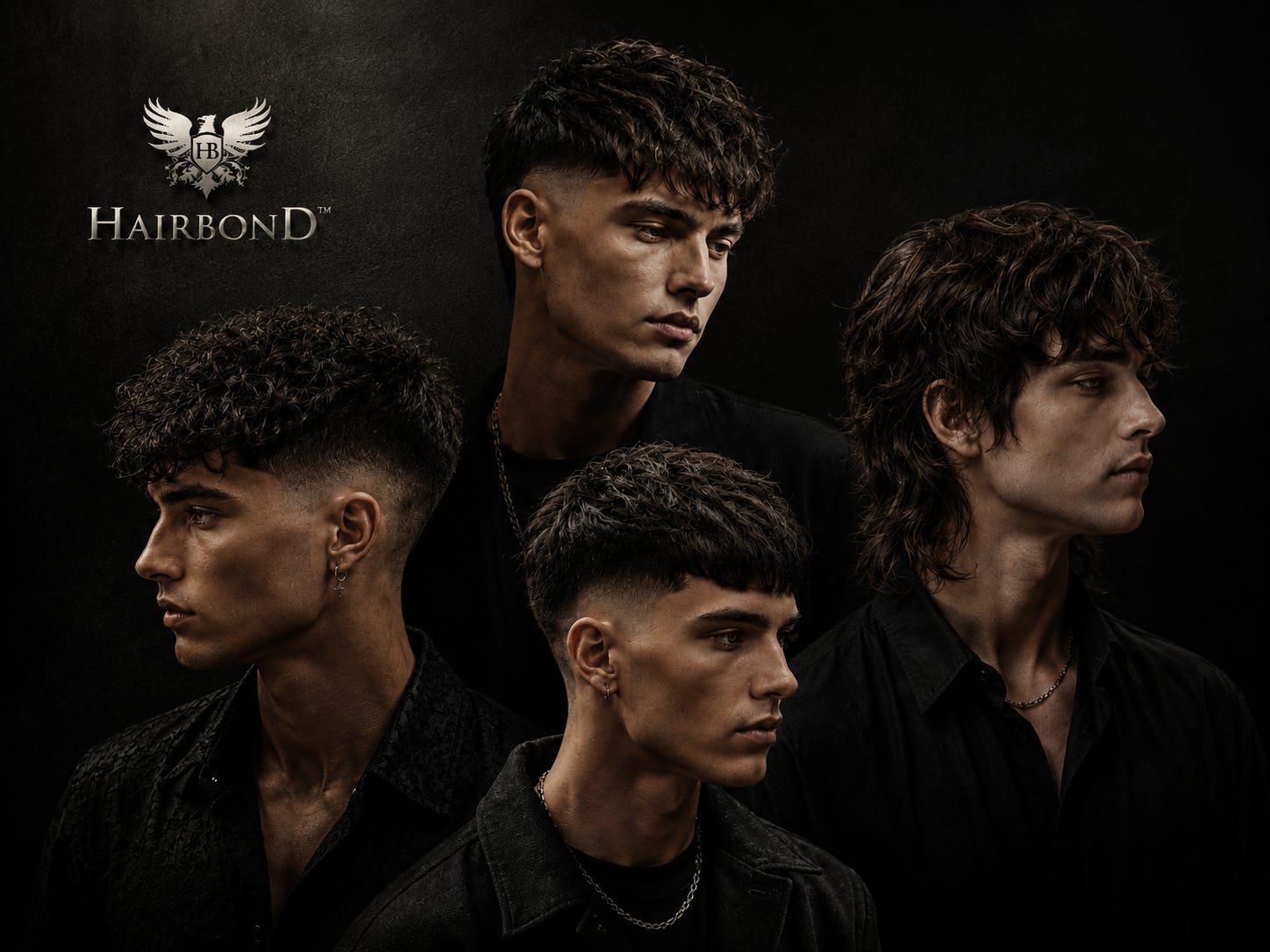
A customer walks into a barbershop.
He does not ask for short back and sides.
He asks for an alpaca.
Or a wolf cut.
Or an Edgar.
Or a low taper with a textured fringe, but not the one his mate has because that one makes him look like a mushroom.
The barber nods.
The customer sits down.
Neither is entirely certain they are discussing the same haircut.
Welcome to modern barbering.
The haircuts have gone viral.
The names have travelled faster than the definitions.
Hairdressers and barbers are being asked for styles that did not exist on their service menus six months ago. At least, the names did not.
That is confusing.
It is also good for business.
Social Media Has Done Something Useful
The hair trade likes to complain about social media.
Sometimes with good reason.
A man films one haircut under a ring light, adds dramatic music and behaves as though he has reinvented hair.
He has not.
Hair was available before TikTok.
But social media has made customers interested.
Young men are saving haircut videos.
They are discussing texture, fringes, layers, tapers and movement.
They are arriving at appointments with ideas.
Some are even using words other than “just tidy it up.”
This is progress.
Interest is difficult to create.
Social media has already done part of the selling.
The trade should not dismiss that interest. It should turn it into better consultations, more creative services, stronger retail and higher-value appointments.
The customer is already curious.
That is the hard part done.
The Problem Is Not Just Education
People keep saying customers need educating.
They do.
But first, the names need organising.
Most viral haircut names are nicknames. They are not agreed technical definitions.
One person calls it a wolf cut.
Another calls it a shag.
Another calls it a modern mullet.
A fourth adds a burst fade and announces the beginning of a new civilisation.
The customer sees a finished image.
The professional has to translate it.
Where does the weight sit?
How short are the sides?
Is the fringe blunt, broken or feathered?
Is the back genuinely longer?
Does the haircut depend on curls?
Does the customer have those curls?
Will he style it at home?
Does he own a hairdryer?
Has he ever knowingly used one?
These questions matter.
They are the difference between a good result and a customer wearing a cap until the next appointment.
The names need organising.
The structures need explaining.
The finishes need defining.
Hairbond intends to do that.
Haircuts Have Become Branded Services
These haircuts are not brands in the legal sense.
Nobody needs to pay a wolf a royalty.
They are branded in the marketing sense.
They have names.
They have recognisable shapes.
They have personalities.
Customers remember them.
“Leave some length and make it messy” sounds uncertain.
“The Textured Fringe” sounds deliberate.
“Shorter around the ears but keep the top longer” sounds like instructions.
“The Low Taper” sounds like a service.
A named haircut is easier to explain, photograph, promote, price and book again.
That is useful for the customer.
It is even more useful for the business.
The fashion industry understands this.
Restaurants understand it too.
A burger becomes more valuable once somebody gives it a name and pushes a small flag into it.
The burger has not changed.
Its confidence has.
Barbering should learn from that.
The Viral Haircuts Customers Are Asking For
The Broccoli Haircut
Also known as the alpaca, wet mop or Zoomer perm.
The names are not helping.
The haircut usually has cleaner, shorter sides with a rounded mass of curls, waves or broken texture on top.
Customers like it because it looks young, casual and full.
It gives straight hair more movement and naturally textured hair more shape.
It also looks good on camera, which is now part of the job whether anybody likes it or not.
The danger is bulk.
Too much weight and it becomes a helmet.
Too little texture and it becomes an ordinary crop wearing a fashionable name.
Hairbond Sea Salt Spray helps create grip, volume and movement before drying.
Hairbond Distorter Clay can then add separation and a dry, matte finish without making the hair stiff or greasy.
The finish should look loose.
Not abandoned.
The Low Taper Fade
The low taper keeps the shortest graduation around the sideburns and neckline while leaving more weight through the sides and top.
Customers like it because it looks clean without making the entire haircut severe.
It works with curls, crops, fringes, curtains and longer styles.
That flexibility is why it will move beyond social media and become a standard barbershop request.
For softer movement and texture, use Hairbond Distorter Clay.
For stronger lift, thickness and hold, use Hairbond Super Fibre.
The taper creates the clean outline.
The product gives the top its character.
Without the correct finish, the haircut may still be technically right.
It will simply look less pleased with itself.
The Textured Fringe
The textured fringe is worn forward with broken sections rather than one hard, solid line.
It is often paired with a low taper, drop fade or cleaner sides.
Customers like it because it frames the face, creates movement and can make the hairline feel less exposed.
It looks relaxed.
Relaxed hair, naturally, can require twenty minutes and several professional decisions.
Use Hairbond Sea Salt Spray before drying to build grip.
Finish with Distorter for a flexible, broken texture.
Use Super Fibre when the hair needs more structure and hold.
The fringe should look deliberate.
Not as though the customer lost an argument with the weather.
The Edgar
The Edgar is built around a strong fringe and a clearly shaped outline.
It can be blunt and severe or softened with texture.
Customers like it because it has identity.
Nobody leaves a barbershop with an Edgar by accident.
That is why the consultation matters.
The shape must suit the face, hairline and density.
A small amount of Distorter can break up the top while keeping the finish matte.
Super Fibre can provide firmer control through the fringe and upper shape.
The product should support the haircut.
It should not turn it into something else.
Mirrors tend to notice.
The Wolf Cut
The wolf cut mixes shorter layers around the crown with longer, looser lengths through the sides and back.
It sits somewhere between a shag and a mullet.
Customers like it because it has movement and character.
It works naturally with waves and curls, but straighter hair can carry it when the layering and styling are right.
Hairbond Wonder Primer helps prepare and control the longer sections.
Sea Salt Spray adds lift and exposes the layers.
A small amount of Distorter can separate selected pieces without flattening the shape.
The movement is the haircut.
Remove the movement and you have merely created maintenance.
The Modern Mullet
The modern mullet keeps extra length at the back but combines it with cleaner sides, softer layers or a taper.
The baby mullet is shorter and easier to wear.
The burst fade mullet creates a stronger outline around the ears.
Customers like it because it feels rebellious without requiring a tour bus.
It can be subtle.
It can be dramatic.
It can also go wrong with impressive speed.
That is why it should be treated as a specialist service, not squeezed between two routine appointments.
Wonder Primer helps control longer sections.
Sea Salt Spray creates movement.
Distorter adds definition without making the back look glued together.
The mullet should have character.
It does not need structural engineering.
The Mod Cut
The modern mod cut uses medium length, soft layers and a loose British shape.
It borrows from the mop top, the shag and early Britpop.
Customers like it because it has personality without relying on a skin fade.
It is also useful for people growing their hair.
The awkward stage becomes a named haircut instead of a three-month apology.
Use Wonder Primer before blow-drying.
Add Sea Salt Spray for lift and a lived-in finish.
Use Distorter sparingly where more separation is needed.
Do not flatten it.
The looseness is the point.
Otherwise, it is merely long hair with paperwork.
Curtains and the Two-Block Cut
Curtains have returned with a softer nineties shape.
The two-block cut keeps the underneath shorter while leaving more length through the top, fringe and crown.
They are different haircuts.
Customers may still use the names interchangeably.
That is exactly why reference guides are needed.
Both styles are popular because they allow movement and length without looking neglected.
Prepare with Wonder Primer.
Blow-dry the parting or fringe into position.
Use Distorter for a natural matte finish or Super Fibre when stronger control is needed.
Use very little.
Curtains should move.
They should not resemble two varnished theatre drapes.
These Services Should Cost More
A viral haircut should not automatically be forced into the cheapest standard appointment.
The customer is not merely asking for hair to be shortened.
They are asking for interpretation.
A detailed consultation.
A personalised version of a reference image.
More careful sectioning.
Texture work.
Finishing.
Styling advice.
Product recommendations.
Often photographs or video afterwards.
Sometimes they will also ask whether you can make their hair thicker, curlier and more like the person in the picture.
A professional can do many things.
Changing genetics during a forty-minute appointment remains difficult.
These appointments should be priced properly.
Not because the haircut appeared on TikTok.
Because the service requires more knowledge, more thought and more time.
A barber or stylist could offer:
Viral Haircut Consultation and Restyle
A full consultation, personalised haircut, professional finish, home-styling lesson and product recommendation.
That sounds valuable because it is valuable.
The mistake is doing fifteen minutes of extra work, charging the old price and then complaining that the customer took too long.
Good work deserves a good price.
Confusion does not.
Named Haircuts Create Better Content
These names are useful beyond the chair.
They create content people are already searching for.
A barbershop can publish:
The Low Taper Guide.
Three Versions of the Textured Fringe.
Who Should Avoid the Edgar.
How to Ask for a Wolf Cut.
How to Style a Modern Mullet at Home.
That is more useful than another photograph captioned “fresh trim.”
The world has enough fresh trims.
Useful content answers questions.
It builds authority.
It attracts customers searching for a particular style.
It improves the consultation before the customer even arrives.
It also gives customers better language.
A customer who understands the difference between a low taper, burst fade and skin fade is easier to serve.
He is also more likely to value the skill involved.
Knowledge is good for business.
Especially when it remembers to rebook.
Product Advice Is Part of the Haircut
The haircut is only half the result.
The finish is what the customer sees in the mirror.
That finish depends on the product.
A textured fringe needs grip and separation.
A mod cut needs movement.
A broccoli cut needs volume without heaviness.
A wolf cut needs preparation and control through longer layers.
A low taper may need a thicker, matte finish through the top.
That is where Hairbond belongs.
Not as an item pushed at the till.
As part of the haircut.
The barber should be able to explain:
This is the haircut.
This is the finish.
This is the product that creates it.
This is how you use it tomorrow.
That is professional advice.
It is also retail.
There is no shame in either.
The landlord is unlikely to accept artistic integrity by direct debit.
Hairbond Will Build the Dictionary
Hairbond was built inside the professional hair industry.
We understand that a haircut, a finish and a viral nickname are not the same thing.
Customers do not care about arguments over terminology.
They want to know four things.
What is it?
Will it suit me?
How do I ask for it?
How do I style it at home?
Hairbond will answer those questions.
We will organise the emerging haircut names.
We will explain the structure behind them.
We will show the differences.
We will identify the hair types they suit.
We will match the right Hairbond products to the right finish.
This is not about pretending Hairbond invented every haircut.
That would be nonsense.
Hair has been growing for quite some time.
The opportunity is to become the brand that makes sense of what is happening.
Some names will disappear.
Others will become permanent salon language.
That is how fashion works.
It returns every twenty years and pretends it has never met you.
The trade can complain about the confusion.
Or it can organise it.
Hairbond will organise it.
Because named haircuts create interest.
Interest creates consultations.
Consultations create better services.
Better services command better prices.
Good products create better finishes.
Better finishes bring customers back.
Social media created the noise.
Hairbond will create the dictionary.