


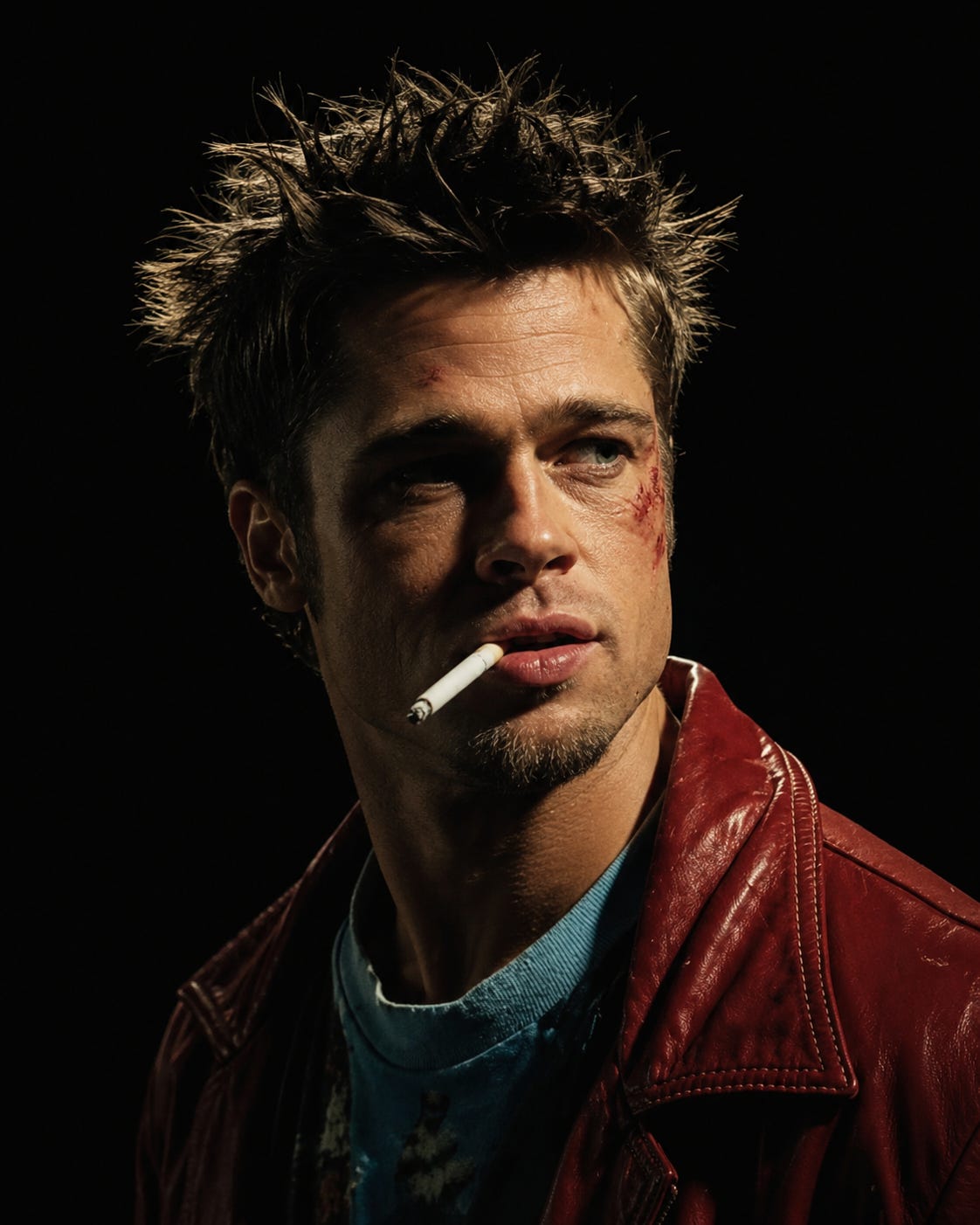
The so called Warrior Cut is bringing longer hair, rougher texture and personality back into men’s styling.
The fade is not dead.
It has simply stopped being compulsory.
For more than a decade, men walked into different shops in different towns and came out with versions of the same haircut.
Low fade.
Mid fade.
High fade.
Choose your setting.
There is nothing wrong with a good fade. Done properly, it takes skill. The blend must be clean. The shape must suit the head. The finish must look effortless, even when it took forty minutes and three different clippers.
The problem was never the fade.
The problem was that it became the answer to everything.
Now men are growing their hair again.
That changes the haircut.
It changes the skills needed to create it.
It changes the products needed to style it.
The Warrior Cut
The latest name is the Warrior Cut.
It takes its influence from the rough, textured men’s styles of the late 1990s.
Longer through the top.
Softer around the sides.
Broken texture.
Movement through the fringe.
Less clipper perfection. More personality.
The name sounds dramatic.
The haircut is not.
It is simply good men’s hair with enough length to move and enough shape to stop it looking neglected.
The finish should look loose.
Not lazy.
There is a difference between texture and simply not owning a comb.
Visual: Place a clean fade beside a longer, textured Warrior Cut. The contrast should be immediate. Polished and precise on one side. Loose and lived in on the other.
Men Want Hair Again
For years, men were encouraged to remove as much hair as possible from the sides.
Then they returned two weeks later to remove it again.
Now more customers want length.
They want waves they did not realise they had.
They want shape around the ears and neck.
They want hair they can push back, bring forward or leave alone.
A good haircut should belong to the person wearing it.
It should suit the face, the hair and the life of the customer.
Not the algorithm.
Scissors Are Coming Back
Social media turned the fade into a performance.
The camera zoomed into the temple.
The barber brushed around the neckline in slow motion.
The client spun towards the mirror as though someone had just restored a Renaissance painting.
Longer hair demands something different.
It requires an understanding of weight, shape, movement and growth patterns.
It also requires a proper consultation.
Where does the hair naturally fall?
What happens when it dries?
How much effort will the customer genuinely make each morning?
That last question matters.
Every man claims he will spend fifteen minutes styling his hair.
Most will spend forty seconds while looking for his keys.
A good barber or hairdresser cuts for reality.
Barbers and Hairdressers Need Each Other
The return of longer men’s hair makes the old divide between barbering and hairdressing look increasingly pointless.
Barbers often understand masculine shapes, clipper work and how men behave in the chair.
Hairdressers often have more experience with layering, longer lengths and movement.
The strongest professionals understand both.
Customers do not care which tribe trained you.
They care whether their hair looks good.
The future belongs to people who can fade when a fade is right, use scissors when scissors are right and admit when the reference photograph requires more hair than the customer currently owns.
Honesty remains an underrated tool.
The Product Must Change Too
The Warrior Cut should not look frozen.
It needs control, but it also needs movement.
For years, men’s styling became obsessed with dryness.
Dry clay.
Dry paste.
Dry powder.
More grip.
More matte.
Some products became so dry that applying them felt like rubbing loft insulation through the fringe.
Those products still have a place.
Shorter hair often needs firm matte control. Fine hair may need dry volume. Thick hair may need something strong enough to make it surrender.
Longer hair needs more flexibility.
That is why Hairbond Drifter and Vector make sense now.
Drifter for Softer Control
Hairbond Drifter Professional Hair Crème is made for medium and longer styles.
It gives soft control, movement and a more natural finish without making the hair rigid.
It follows the thinking behind older Hairbond products such as Designer and Texturiser Cream.
Those products understood something simple.
Not every man wants his hair locked into place.
Drifter works with the haircut rather than sitting on top of it shouting for attention.
For a softer Warrior Cut, it is the obvious choice.
Use a small amount.
Work it through the hair.
Let the cut breathe.
Vector Has Waited for Its Moment
Hairbond Vector Professional Hair Gum has been planned for years.
We first considered a gum style product when the market wanted everything dry and matte.
At the time, it was probably too early.
Now longer hair is returning.
Men want control they can adjust during the day.
Vector gives flexible, reworkable hold with movement.
The hair can be pushed back.
Brought forward.
Restyled.
Touched.
Sometimes an idea is not wrong.
It is simply waiting for the haircut to catch up.
Vector has waited.
The market is finally ready for it.
Visual: Show the same textured haircut styled two ways. Drifter for a softer, natural finish. Vector for a more controlled, defined finish.
Matte Products Still Matter
This is not the death of clay, fibre or putty.
Hairbond Super Fibre still makes sense when fine hair needs dry volume.
Distorter Clay gives flexible matte texture and separation.
Forger gives stronger matte hold for thicker or more stubborn hair.
Each product has a job.
Super gives dry volume.
Distorter gives matte texture.
Forger gives strong control.
Drifter gives softness.
Vector gives flexible hold.
That is what a proper range should do.
Different products for different hair.
Not the same formula in five coloured jars while a marketing department pretends otherwise.
Use Less Product
Longer hair exposes bad product habits.
People use too much.
Then they add more because the first amount made the hair heavy.
Then they blame the product.
Start small.
Warm it properly in the hands.
Work it through the hair rather than wiping it across the surface.
Build only when needed.
The haircut should still be visible when the styling is finished.
Good product reveals the shape.
It does not bury it.
Do Not Make It Another Uniform
The Warrior Cut should not become the next compulsory haircut.
That would miss the point.
Some men need more length.
Some need less weight.
Some have waves.
Some have straight hair.
Some have thick hair that needs reducing.
Some have fine hair that needs protecting like the last tree in a forest.
The reference photograph should begin the conversation.
It should not end it.
The Fade Will Survive
The fade will remain perfect for many men.
It is clean, practical and powerful when it suits the face, hair and lifestyle.
But it is no longer the only serious option.
That is the real story.
Men’s hair is becoming less uniform.
More length.
More texture.
More movement.
More personality.
That is good for barbers.
Good for hairdressers.
Good for Hairbond.
Most importantly, it is good for the man in the chair.
The fade has not been defeated.
It has simply been told to share the mirror.