

Most brands make themselves the hero.
They talk about their history.
Their awards.
Their innovation.
Their passion.
Every company has passion now.
It is usually printed on the back of the box beside the barcode.
Hairbond sees the story differently.
Hairbond is not the hero.
The barber is not the hero.
The hairdresser is not the hero.
The customer is.
That is the rule.
Everything starts there.
The Customer Has a Mission
The customer does not wake up wanting another jar of hair product.
Nobody opens their eyes at seven in the morning and thinks:
“I hope I can acquire some styling paste today.”
They want their hair to behave.
They want to look sharp.
They want to feel confident before work, a date, a meeting, a night out or the school run.
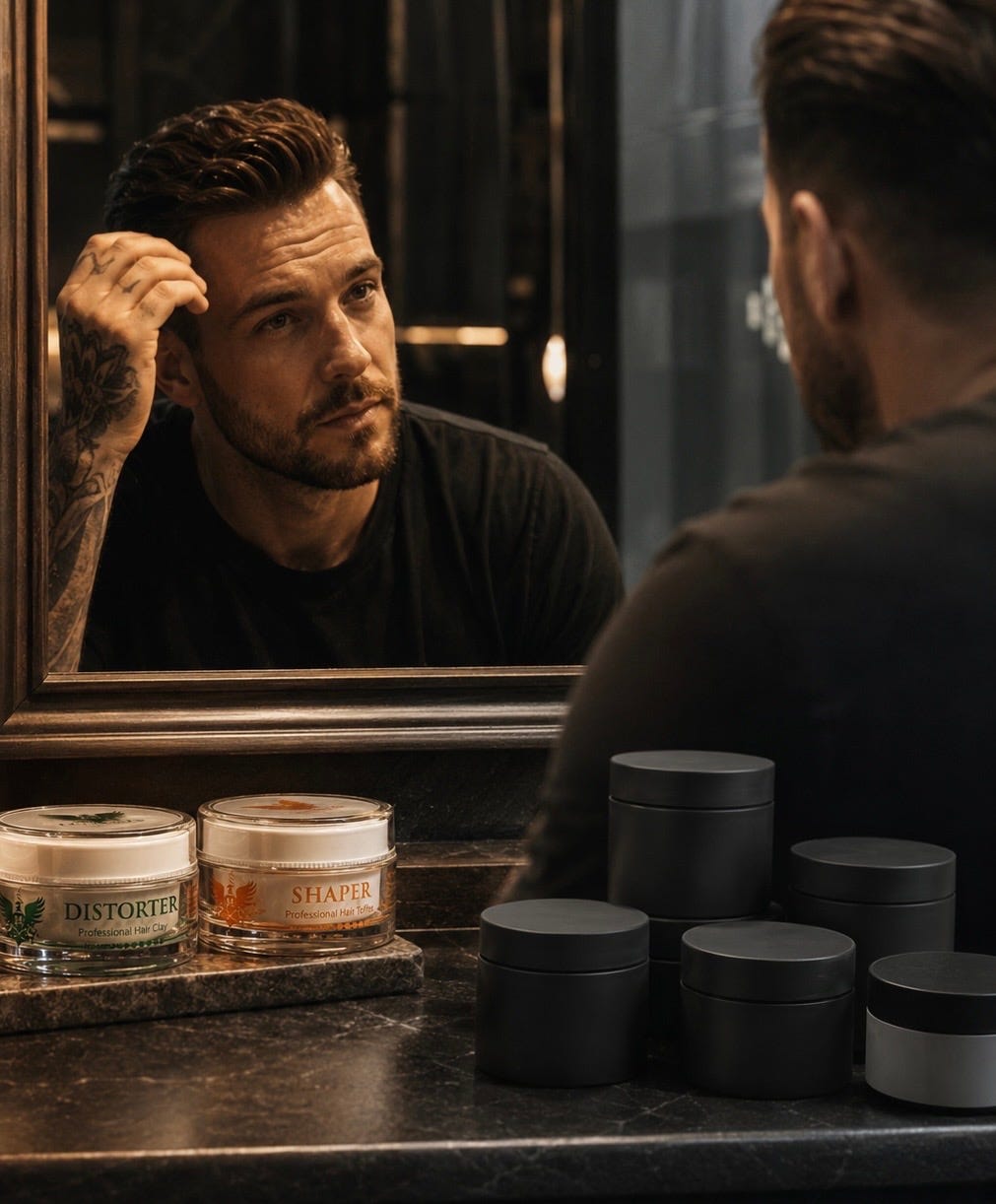
They want to recognise themselves in the mirror.
Not a model from an advert.
Not somebody else.
Themselves on a good day.
That is the mission.
The product is only the tool.
The Villain Is Blandness
Every hero needs something standing in the way.
For Hairbond, the villain is blandness.
Bland products.
Cheap packaging.
Forgettable fragrances.
Average formulas.
Premium prices.
Products created by companies that claim to be customer-led but are often controlled by the spreadsheet.
The accountant enters the meeting.
The jar gets thinner.
The formula gets cheaper.
The fragrance gets safer.
The design loses its character.
The price remains remarkably confident.
Nobody sets out to create a boring product.
They simply remove every interesting decision, one meeting at a time.
Eventually, nothing is offensive.
Nothing is exciting.
Nothing is remembered.
The customer is expected to accept less while the marketing says more.
Hairbond was created to stand against that.
Because bland is expensive at any price.
Premium Should Not Need an Alibi
A product should not need six paragraphs of corporate language to explain why it is premium.
You should be able to see it.
Feel it.
Use it.
Remember it.
That is why Hairbond was designed to create pride before the lid is even opened.
The jars were made to feel substantial.
The clear acrylic lids gave them presence.
The packaging was designed to improve the bathroom shelf, not apologise for being on it.
Those details cost more.
It would be cheaper to remove them.
That is precisely the point.
Hairbond was not built by asking:
“How little can we get away with?”
It was built by asking:
“How should the customer feel when they own this?”
One question creates a margin.
The other creates a brand.
Products Should Feel Worth Owning
Performance matters.
It is the minimum.
But a good product should also improve the ritual of getting ready.
It should feel good in the hand.
It should look right on the shelf.
It should smell memorable.
It should make the customer feel they chose well.
People care about the objects around them.
Their shoes.
Their watch.
Their phone.
Their fragrance.
The things on their bathroom shelf.
Hair products belong in that world too.
That is not vanity.
It is identity.
The product should never shout louder than the customer.
It should make the customer feel sharper.
Fragrance Creates Memory
Hairbond has always used distinctive, sweet fragrances.
That was deliberate.
Fragrance creates memory.
It can remind you of sweets, childhood, fresh starts, nights out or places you thought you had forgotten.
The lid opens.
The routine begins.
The customer may never remember the technical name of an ingredient.
They will remember how the product made them feel.
They will remember how it smelled.
Corporate products often remove personality because personality feels risky.
Hairbond believes being forgotten is the greater risk.
The Formula Has to Earn Its Place
Beautiful packaging cannot rescue a bad formula.
A memorable fragrance cannot hold your hair in place.
Emotion without performance is expensive disappointment.
The hold must hold.
The texture must create texture.
The finish must look right.
The product must help the customer achieve the result without turning the bathroom into a research facility.
Good tools make people feel capable.
Bad tools make people blame themselves.
That difference matters.
When the product works, the customer understands their hair better.
They use less guesswork.
They feel more in control.
The formula is not the hero.
It helps the hero win.
The Barber Is the Trusted Expert
The barber or hairdresser matters.
They listen.
They understand the customer’s hair.
They create the cut.
They recommend what will work.
But they are not the hero.
They are the trusted expert.
The person who says:
“This suits you.”
The professional creates the result in the chair.
Hairbond helps the customer recreate it at home.
The professional understands the problem.
Hairbond provides the tool.
The customer takes the action.
A good guide does not make the customer dependent.
A good guide makes them more capable.
The customer should finish the journey thinking:
“I can do this.”
The Journey Has Three Steps
Every Hairbond story should move through three stages.
Frustration.
Guidance.
Victory.
Step One: Frustration
The customer leaves the barber looking sharp.
The next morning arrives.
The shape has gone.
The volume has collapsed.
The bathroom shelf contains six products and no clear answer.
One is too greasy.
One is too dry.
One has the holding power of warm custard.
The customer starts to think they are bad at styling their own hair.
They have a mission.
Something is in the way.
The story has begun.
Step Two: Guidance
The barber recommends the right product.
Not the loudest one.
Not the cheapest one.
Not the one being waved around by an influencer with completely different hair.
The right one.
Hairbond explains what it does.
How much to use.
How to apply it.
What result to expect.
The customer still has doubts.
Good.
They have wasted money before.
They have heard promises before.
They want proof.
The product must earn their trust.
Step Three: Victory
The customer uses the product at home.
The hair moves into place.
The finish looks right.
The style lasts.
The routine gets easier.
They leave the house feeling ready.
That is the win.
Not Hairbond making a sale.
Not another jar appearing in a bathroom.
Not a graph rising during a quarterly meeting.
The customer feels better.
Hairbond helped.
The customer won.
Keep the medals in the correct order.
What Hairbond Really Sells
Hairbond sells hair products.
Obviously.
There are jars involved.
But that is not the full value.
Hairbond sells the confidence to leave the house feeling ready.
The pride of owning something well designed.
The familiarity of a fragrance that becomes part of the morning.
The reassurance of knowing what works.
The feeling of looking in the mirror and thinking:
“Yes. That is me.”
That is what the customer buys into.
Not just hold.
Not just texture.
Not just packaging.
A better feeling.
A stronger sense of self.
A small moment of control before the rest of the day begins making demands.
The Higher Purpose
Hair is not the most important thing in the world.
Let us not become a cult.
But confidence matters.
Pride matters.
Self-expression matters.
Feeling comfortable in your own skin matters.
Hairbond exists to improve one small but meaningful part of life.
To help people feel more like themselves.
To make getting ready feel better.
To prove that customers do not have to choose between performance and personality.
Useful and exciting.
Beautiful and effective.
Memorable and worth the money.
The purpose is not to make Hairbond the centre of the customer’s world.
It is to help the customer feel more confident in their own.
The Hairbond Rule
Every Hairbond advert, article, product page and campaign should follow the same system.
The customer is the hero.
The customer has the mission.
Blandness is the villain.
The barber is the trusted expert.
Hairbond is the guide.
The product is the tool.
The journey moves from frustration to guidance to victory.
The resolution is confidence.
The higher purpose is helping people feel more like themselves.
Hairbond should never ask the customer to admire the brand.
It should help the customer admire themselves.
Premium should not need an alibi.
Bland is expensive at any price.
The corporations made hair products cheaper to produce.
Hairbond made them better to own.