


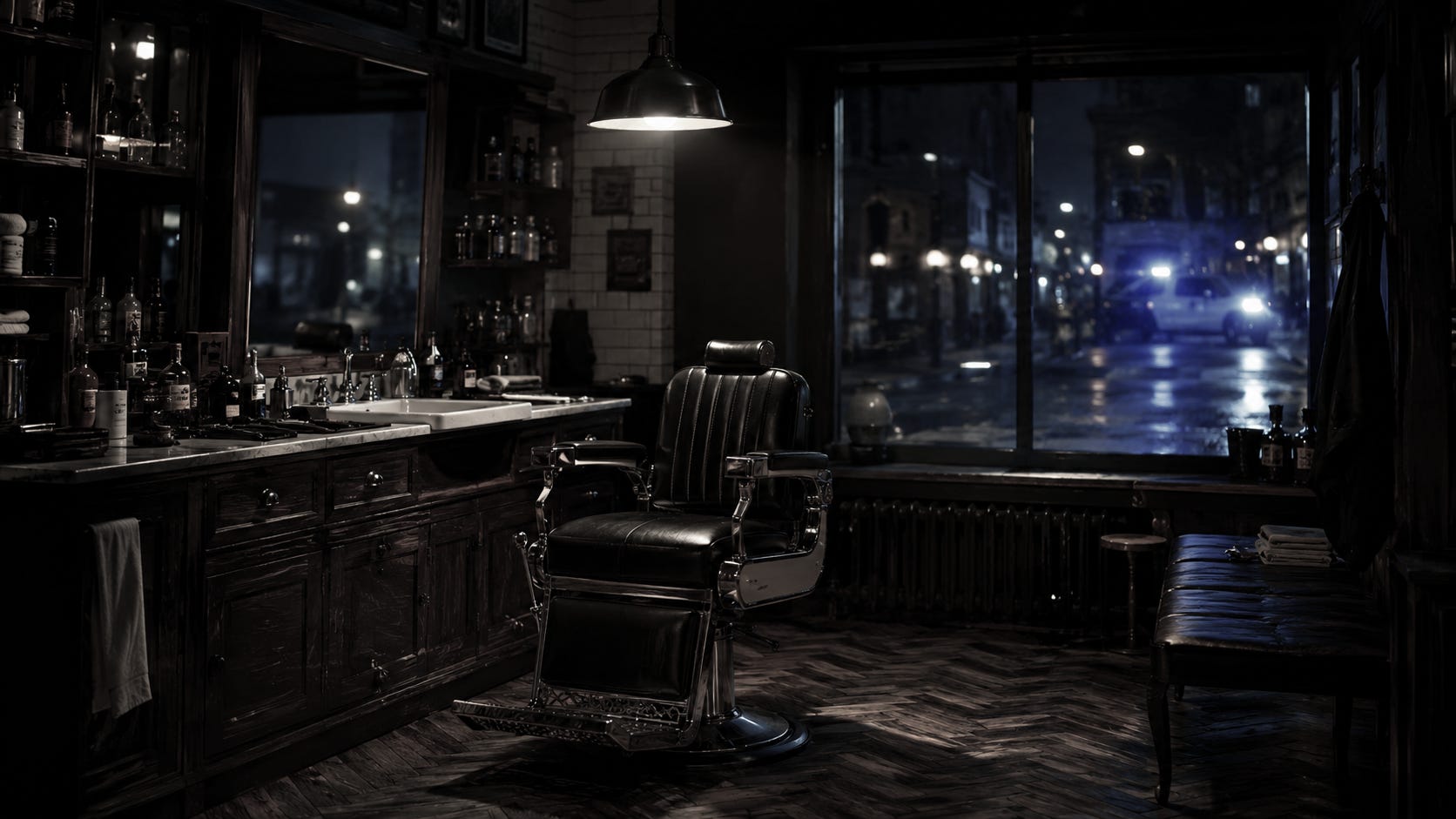
There is something wrong when people walk past a barber shop and wonder what else is going on behind the till.
That should bother everyone in this industry.
Because barbering is a proper trade.
It takes skill.
It takes time.
It takes trust.
A good barber can spend twenty years building a reputation.
A bad business can damage it in twenty minutes.
And increasingly, the reputation being damaged belongs to the whole trade.
This Is Not Pub Talk Anymore
The Government is already targeting rogue high-street businesses suspected of links to organised crime.
Barber shops have been named alongside vape stores, mini-marts and other premises in investigations involving suspected money laundering, tax evasion, illegal working and illicit trading.
Good.
If there is criminality, investigate it.
If there is evidence, act.
If a shop is a front, close it.
That is not an attack on barbering.
It is a defence of it.
A Real Barber Shop Has Real Economics
Forget the pole, the neon sign and three nice chairs.
Look at the bills.
Rent.
Electricity.
Insurance.
Tools.
Products.
Laundry.
Training.
Wages.
Holiday pay.
Tax.
National Insurance.
Business rates.
Card fees.
Repairs.
Then somebody has to stand behind a chair all day and be good enough for the customer to come back.
That is a barber shop.
It is also bloody hard work.
A legitimate barber has to make the numbers add up.
So when that barber competes against an operator hiding turnover, exploiting workers, employing people illegally or using the premises for something other than the business above the door, this is no longer ordinary competition.
They are competing against another set of economics.
It is asking one boxer to wear gloves while the other brings a chair.
You cannot out-cut a business that does not need to make its money from cutting hair.
The Worst Damage Is Not The Price
Cheap competition hurts.
Suspicion does more damage.
Every raid creates another headline.
Every criminal case creates another joke.
Every rogue shop makes the next legitimate barber look slightly more questionable.
Eventually the public stops separating the two.
That is unfair because Britain is full of exceptional barbers.
People who started with clippers and ambition.
People who served apprenticeships.
People who opened with one chair and built six.
People who know three generations of the same family.
People who give a teenager a first job.
People who notice when an elderly regular has not been in for a few weeks.
People who sponsor the local football team.
People who spend half their working lives hearing about divorces, babies, jobs, bereavements and everything else that walks through the door.
The barber shop is one of the few genuinely social businesses left on many British high streets.
And when a legitimate barber disappears, we lose more than somewhere to get a haircut.
We lose a community anchor.
A youth employer.
A conversation.
A light left on after five o’clock.
Replace enough genuine businesses with fronts and the whole street dies a little more.
Do Not Punish The Good Guys
There is an obvious danger.
Government discovers a problem.
Government writes regulations.
Somebody produces a 94-page PDF.
The legitimate barber gets another form.
No thanks.
The people already following the rules should not carry the cost of the people deliberately avoiding them.
And enforcement cannot become lazy profiling.
A £12 haircut is not evidence of crime.
Cash is not evidence of crime.
An accent is not evidence of crime.
Nationality is not evidence of crime.
Opening late is not evidence of crime.
Evidence is evidence.
Follow the money.
Check the employment records.
Check the tax position.
Know who actually operates the business.
Look at repeat insolvencies.
Look at illegal working.
Look at illicit goods.
Look at whether the trading figures bear any sensible relationship to the activity inside the premises.
Join the dots between councils, HMRC, police and enforcement agencies.
Then act on what the evidence says.
Not what somebody looks like.
Make Being Legitimate Worth Something
This does not need another bureaucratic empire.
It needs a simple baseline.
A straightforward local register identifying who operates the premises.
Verifiable business ownership.
Basic employment checks.
Appropriate insurance.
Minimum hygiene requirements.
A clear route for councils and enforcement agencies to share serious concerns.
One business.
One accountable operator.
One set of rules.
Pass the basic tests and get on with cutting hair.
Fail because of an innocent mistake and fix it.
Deliberately build a business around cheating the system and expect consequences.
That is not excessive regulation.
That is the minimum required for a functioning market.
Because right now the honest operator can end up with an extraordinary disadvantage.
He pays more precisely because he behaves properly.
Think about how absurd that is.
He trains his staff.
Pays his taxes.
Buys legitimate professional products.
Insures the premises.
Pays proper wages.
Deals with rising rent and electricity.
Then somebody opens nearby who may be avoiding half those costs.
We call it competition.
The barber paying every bill probably has another word for it.
Hairbond Stands With The Barber
Hairbond has spent years standing alongside professional hairdressers and barbers.
So our position is not complicated.
We are for the real barber shop.
The skilled one.
The independent one.
The owner who knows the craft.
The barber who knows the difference between a taper and a fade without consulting TikTok.
The person who built a business one head at a time.
Those barbers should not fear serious enforcement.
They should demand it.
Because every criminal operation removed from a high street gives a little credibility back to everybody who earned theirs properly.
Judge businesses by the same standards.
Is the operation legitimate?
Are its workers employed legally?
Does it pay what it owes?
Does it meet basic standards?
Is barbering actually the business?
If yes, back it.
Spend money in it.
Help it grow.
If not, investigate it properly.
Because the good barber has been forced to carry somebody else’s reputation for long enough.
Shut down the fronts, level the playing field and give the British high street back to the real barbers.